The muscle protein that damages your kidneys
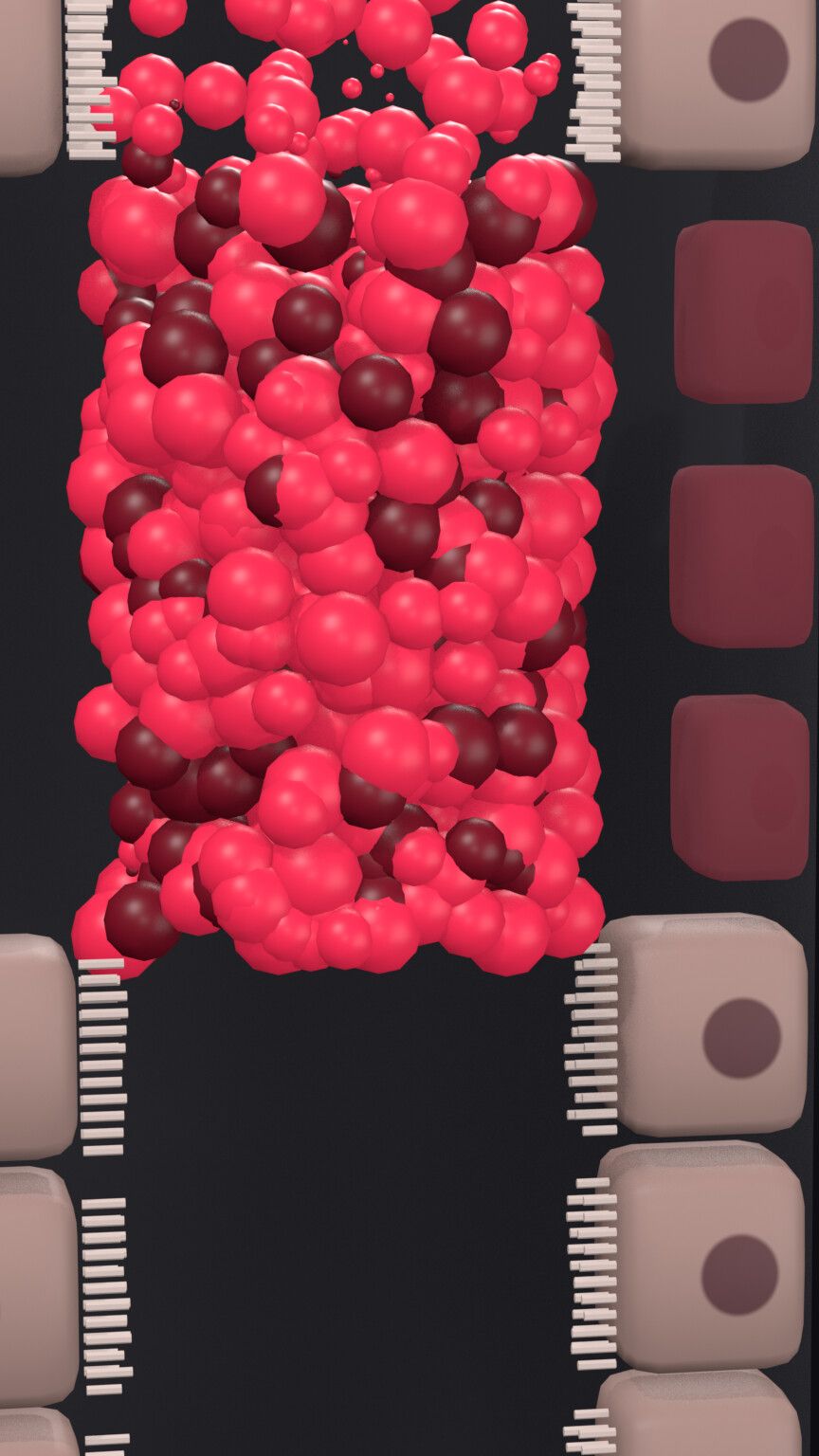
Myoglobin stores oxygen inside muscle fibers. When a fiber’s membrane fails, after effort far beyond what the muscle is used to, a crush, or lying immobile on a limb for far too long, myoglobin, potassium and enzymes spill into the blood: that is rhabdomyolysis. Too much potassium, too fast, can push the heart into a fatal rhythm. In the kidney’s tubules, myoglobin can clump into casts that plug them while its iron-bearing heme damages the tubule cells, and the kidney can shut down.
Claims and sources
- 01
Myoglobin lives inside muscle cells, helps supply the oxygen they burn for energy, and gives red meat its color.
“Energy production” is the video’s shorthand: myoglobin carries oxygen toward the mitochondria and makes no energy itself.
Myoglobin is a cytoplasmic hemoprotein, expressed solely in cardiac myocytes and oxidative skeletal muscle fibers, that reversibly binds O2 by its heme residue, a porphyrin ring:iron ion complex.
Ordway GA, Garry DJ. Myoglobin: an essential hemoprotein in striated muscle. J Exp Biol. 2004;207(Pt 20):3441-3446.
Within the sarcoplasm, myoglobin, a mobile carrier of oxygen, is developed in response to mitochondrial demand and augments the flow of oxygen to the mitochondria.
Wittenberg JB, Wittenberg BA. Myoglobin function reassessed. J Exp Biol. 2003;206(Pt 12):2011-2020.
Myoglobin is the sarcoplasmic heme protein primarily responsible for the meat color, and the chemistry of myoglobin is species specific.
Suman SP, Joseph P. Myoglobin chemistry and meat color. Annu Rev Food Sci Technol. 2013;4:79-99.
- 02
Membrane failure releases myoglobin, potassium and enzymes; in the kidney, myoglobin forms obstructing casts and its heme injures tubule cells; kidney injury can follow.
The pathophysiology underlying all cases of rhabdomyolysis is disruption of the myocyte cell membrane and leakage of cell contents into circulation.
Kodadek L, Carmichael SP II, Seshadri A, Pathak A, Hoth J, Appelbaum R, Michetti CP, Gonzalez RP. Rhabdomyolysis: an American Association for the Surgery of Trauma Critical Care Committee Clinical Consensus Document. Trauma Surg Acute Care Open. 2022;7(1):e000836.
Rhabdomyolysis is a clinical syndrome that comprises destruction of skeletal muscle with outflow of intracellular muscle content into the bloodstream.
Chavez LO, Leon M, Einav S, Varon J. Beyond muscle destruction: a systematic review of rhabdomyolysis for clinical practice. Crit Care. 2016;20(1):135.
- 03
Myoglobin sometimes turns urine the color of cola, and rhabdo can happen with urine that looks normal.
On screen
92 of 200
No dark urine · Sabouri 2024 · 200 hospitalized cases
That is a chart-documentation measure in a hospitalized cohort, not direct observation; urine myoglobin was measured in only 15 of the 200. Kidney injury in the same cohort: 17 of 200 (8.5%, KDIGO); trauma, toxin and intensive-care cohorts run far higher (reviews quote 10–55% across all causes).
No dark urine was documented in 92 of 200 adults hospitalized with exertional rhabdomyolysis.
Dark urine was defined based on the documentation of discolored urine, such as dark, brown, cola-colored, or red.
Sabouri AH, Yurgionas B, Khorasani S, Durant EJ, Kafaie J, Hung YY, Klingman JG, Nemazie S. Acute Kidney Injury in Hospitalized Patients With Exertional Rhabdomyolysis. JAMA Netw Open. 2024;7(8):e2427464.
Urine myoglobin was positive in 19% of 475 all-cause inpatients.
Urine myoglobin detected by dipstick/ultrafiltration was positive in only 19%.
Melli G, Chaudhry V, Cornblath DR. Rhabdomyolysis: an evaluation of 475 hospitalized patients. Medicine (Baltimore). 2005;84(6):377-385.
- 04
It isn’t only a beginner’s problem. Trained athletes can get it at their limits; the pattern is intense effort the muscles aren’t used to, a crush, or prolonged immobilization with a limb compressed.
Armed Forces Health Surveillance Division. Exertional rhabdomyolysis among active component members of the U.S. Armed Forces, 2020–2024. MSMR. 2025;32(6):11-16.
O'Connor FG, Raleigh M, Oh R. Clinical Practice Guideline for the Management of Exertional Rhabdomyolysis in Warfighters. CHAMP, Bethesda, MD; September 2025.
Patients who fall with subsequent prolonged immobilization are also at higher risk for rhabdomyolysis, particularly if their limbs are compressed by their head or torso for a significant period of time, leading to muscle hypoxia.
Kodadek L, et al. Rhabdomyolysis: an AAST Critical Care Committee Clinical Consensus Document. Trauma Surg Acute Care Open. 2022;7(1):e000836.
- 05
Too much potassium, too fast, can push the heart into a fatal rhythm.
Cardiac symptoms may be secondary to electrolyte abnormalities, such as severe hyperkalemia, and range from dysrhythmia to cardiac arrest.
Kodadek L, et al. Rhabdomyolysis: an AAST Critical Care Committee Clinical Consensus Document. Trauma Surg Acute Care Open. 2022;7(1):e000836.
- 06
Kidney function often recovers.
198 of 200 hospitalized exertional cases returned to baseline creatinine and none developed chronic kidney disease.
Seventeen patients (8.5%) developed AKI, none developed CKD, 1 (0.5%) developed compartment syndrome, and there were no fatalities.
Sabouri AH, et al. Acute Kidney Injury in Hospitalized Patients With Exertional Rhabdomyolysis. JAMA Netw Open. 2024;7(8):e2427464.
Damage can persist after severe cases: 28.8% of followed ICU patients had reduced kidney function at three months.
Candela N, Silva S, Georges B, Cartery C, Robert T, Moussi-Frances J, et al. Short- and long-term renal outcomes following severe rhabdomyolysis: a French multicenter retrospective study of 387 patients. Ann Intensive Care. 2020;10:27.
- Picture
The opening molecule is drawn from myoglobin’s measured structure.
Protein Data Bank entry 1MBN, with the oxygen placed from entry 1MBO. Both are sperm whale myoglobin, the first protein structure ever solved; the fold is drawn as rods, a stylization.
Watson HC. The stereochemistry of the protein myoglobin. Prog Stereochem. 1969;4:299. Protein Data Bank entry 1MBN (sperm whale myoglobin, X-ray, 2.0 A).
Phillips SEV. Structure and refinement of oxymyoglobin at 1.6 A resolution. J Mol Biol. 1980;142(4):531-554. Protein Data Bank entry 1MBO.
Left out
“The classic triad is seen in under 10% of patients.”
Widely repeated; traces to an uncited sentence in a 2005 review. No primary data found, so the video doesn’t say it.
A duration for immobilization.
No source gives one; the video says “far too long.”
“Most recover with early treatment.”
No source ties recovery to timing, and severe cases can leave lasting damage.
Corrections
None.
Report an error: contact@worm.dev
Transcript
In muscle, this protein stores oxygen. In your kidneys, it's toxic.
It's called myoglobin.
It lives inside your muscle cells, helping with energy production.
Myoglobin is what gives red meat its color.
Push a muscle far past what it's used to. Crush it. Or lie on it, without moving, for far too long, and the muscle fiber's membrane can fail.
What was inside spills into your blood: potassium, enzymes, and myoglobin. That's rhabdomyolysis, or rhabdo.
The potassium is the immediate danger. Too much too fast can push your heart into a fatal rhythm.
The myoglobin travels. Your kidneys filter it from your blood. Inside their tiny tubes, it can clump and form a plug. Its iron core can damage the cells of the tube wall.
Clogged and injured, the kidney can shut down. Sometimes the myoglobin makes it into your urine and turns it the color of cola.
But not always. Rhabdo can happen with urine that looks normal.
And it isn't only a beginner's problem. Trained athletes can get it, at their limits. The pattern is intense effort that your muscles aren't used to.
Kidney function often does recover.
Reference list
- Ordway GA, Garry DJ. Myoglobin: an essential hemoprotein in striated muscle. J Exp Biol. 2004;207(Pt 20):3441-3446. doi.org/10.1242/jeb.01172
- Wittenberg JB, Wittenberg BA. Myoglobin function reassessed. J Exp Biol. 2003;206(Pt 12):2011-2020. doi.org/10.1242/jeb.00243
- Suman SP, Joseph P. Myoglobin chemistry and meat color. Annu Rev Food Sci Technol. 2013;4:79-99. doi.org/10.1146/annurev-food-030212-182623
- Kodadek L, Carmichael SP II, Seshadri A, Pathak A, Hoth J, Appelbaum R, Michetti CP, Gonzalez RP. Rhabdomyolysis: an American Association for the Surgery of Trauma Critical Care Committee Clinical Consensus Document. Trauma Surg Acute Care Open. 2022;7(1):e000836. doi.org/10.1136/tsaco-2021-000836
- Chavez LO, Leon M, Einav S, Varon J. Beyond muscle destruction: a systematic review of rhabdomyolysis for clinical practice. Crit Care. 2016;20(1):135. doi.org/10.1186/s13054-016-1314-5
- Sabouri AH, Yurgionas B, Khorasani S, Durant EJ, Kafaie J, Hung YY, Klingman JG, Nemazie S. Acute Kidney Injury in Hospitalized Patients With Exertional Rhabdomyolysis. JAMA Netw Open. 2024;7(8):e2427464. doi.org/10.1001/jamanetworkopen.2024.27464
- Melli G, Chaudhry V, Cornblath DR. Rhabdomyolysis: an evaluation of 475 hospitalized patients. Medicine (Baltimore). 2005;84(6):377-385. doi.org/10.1097/01.md.0000188565.48918.41
- Armed Forces Health Surveillance Division. Exertional rhabdomyolysis among active component members of the U.S. Armed Forces, 2020–2024. MSMR. 2025;32(6):11-16. pmc.ncbi.nlm.nih.gov/articles/PMC12266732
- O'Connor FG, Raleigh M, Oh R. Clinical Practice Guideline for the Management of Exertional Rhabdomyolysis in Warfighters. CHAMP, Bethesda, MD; September 2025. champ.usuhs.edu/sites/default/files/2025-09/WHEC_Clinical_Practice_Guidelines_ER.pdf
- Candela N, Silva S, Georges B, Cartery C, Robert T, Moussi-Frances J, et al. Short- and long-term renal outcomes following severe rhabdomyolysis: a French multicenter retrospective study of 387 patients. Ann Intensive Care. 2020;10:27. doi.org/10.1186/s13613-020-0645-1
- Watson HC. The stereochemistry of the protein myoglobin. Prog Stereochem. 1969;4:299. Protein Data Bank entry 1MBN (sperm whale myoglobin, X-ray, 2.0 A). doi.org/10.2210/pdb1mbn/pdb
- Phillips SEV. Structure and refinement of oxymyoglobin at 1.6 A resolution. J Mol Biol. 1980;142(4):531-554. Protein Data Bank entry 1MBO. doi.org/10.1016/0022-2836(80)90262-4